Everything You Need to Know About Stacker Cranes
Release time: 2026-04-08
In modern logistics and warehousing, efficiency and space utilization are more important than ever. As industries move toward automation and smart storage systems, stacker cranes have become a key solution for high-density warehousing and automated material handling.
This article explains everything you need to know about stacker cranes, including how they work, their main types, applications, and benefits.
Table of Contents
What Is a Stacker Crane?
A stacker crane is an automated or semi-automated material handling system used in warehouses, distribution centers, and manufacturing facilities. It operates within narrow aisles of a high-bay storage system to store and retrieve goods automatically.
Stacker cranes are commonly used in Automated Storage and Retrieval Systems (ASRS), helping companies improve storage efficiency while reducing manual labor.
How Does a Stacker Crane Work?
A stacker crane moves along a fixed rail system inside a warehouse aisle. It typically consists of:
- A vertical mast for lifting and lowering loads
- A horizontal carriage for movement along the aisle
- A load handling device (such as forks or shuttle)
- A control system for automated operation
The system works by receiving instructions from a warehouse management system (WMS), which tells the crane where to pick up or place goods. The crane then moves automatically to complete the task with high precision.
Main Types of Stacker Cranes
Stacker cranes are mainly designed in two structural configurations based on load capacity, stability requirements, and warehouse height. The two most common types are Single-Column Stacker Crane and Double-Column Stacker Crane.
1. Single-Column Stacker Crane
A Single-Column Stacker Crane features a single vertical mast structure, making it more compact and flexible for medium-duty warehouse applications.
It is typically used in environments where storage height is moderate and load requirements are not extremely heavy.
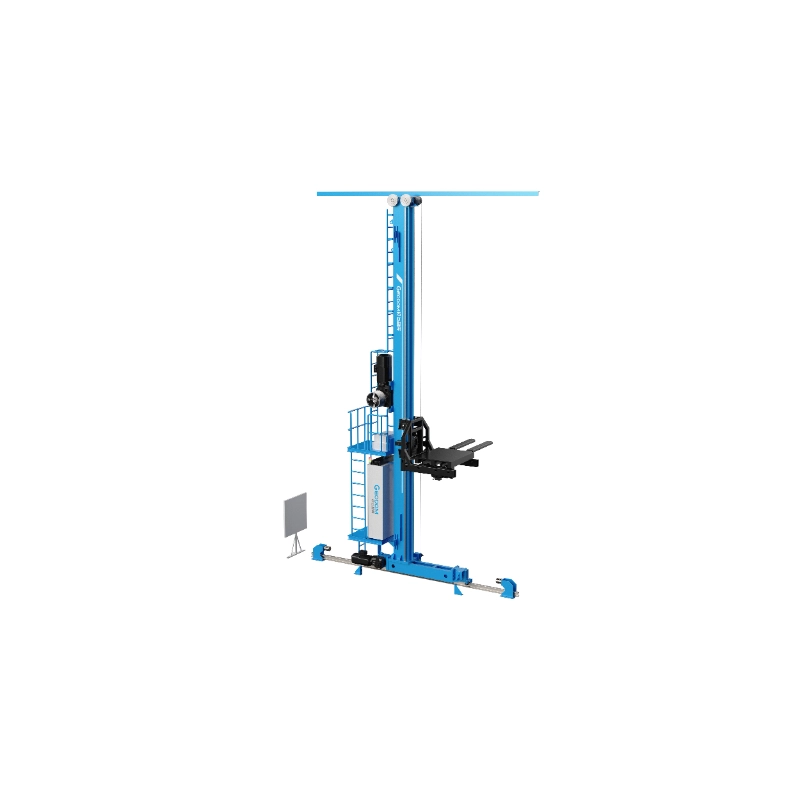
Key characteristics:
- Compact structure with smaller footprint
- Suitable for medium-height warehouse systems
- Lower installation and maintenance cost
- Flexible operation for light to medium loads
- Ideal for space-saving warehouse layouts
This type is widely used in small-to-medium automated storage systems, distribution centers, and light manufacturing warehouses.
2. Double-Column Stacker Crane
A Double-Column Stacker Crane is built with a dual-mast structure, providing higher stability and stronger load-bearing capacity.
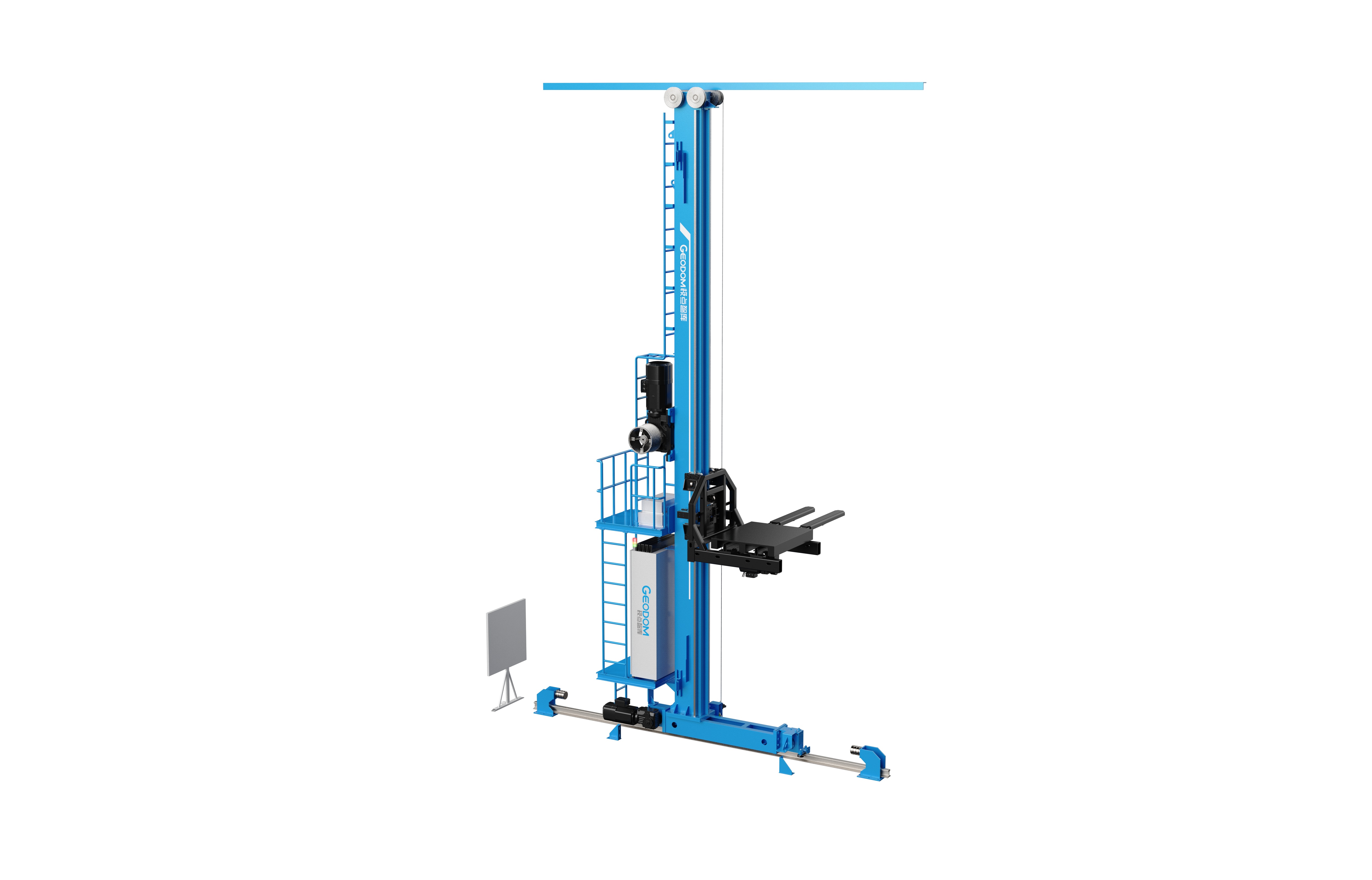
It is designed for high-bay warehouses and heavy-duty automated storage systems where height and load capacity are critical.
Key characteristics:
- Strong structural stability with dual columns
- Higher lifting capacity for heavy loads
- Suitable for tall warehouse racking systems
- Better performance in high-speed and continuous operation
- Ideal for large-scale automated logistics systems
This type is commonly used in industrial warehouses, cold storage facilities, and high-density ASRS systems.
Key Applications of Stacker Cranes
Stacker cranes are widely used in various industries, including:
- E-commerce and fulfillment centers
- Cold storage and food logistics
- Manufacturing and assembly plants
- Pharmaceutical warehouses
- Automotive parts storage systems
They are especially valuable in environments where high storage density and fast retrieval are required.
Benefits of Using Stacker Cranes
1. High Storage Efficiency
Stacker cranes allow warehouses to use vertical space effectively, significantly increasing storage capacity.
2. Reduced Labor Costs
Automation reduces the need for manual forklift operations and lowers labor dependency.
3. Improved Accuracy
Integrated control systems ensure precise storage and retrieval, reducing human errors.
4. Faster Operation Speed
Stacker cranes can operate continuously with high speed and consistent performance.
5. Enhanced Safety
By reducing human involvement in heavy lifting and narrow aisles, workplace safety is greatly improved.
Stacker Crane vs Traditional Forklift
Compared with forklifts, stacker cranes offer several advantages:
- Operate in narrower aisles
- Provide higher storage density
- Enable full automation integration
- Reduce operational errors
- Improve long-term warehouse efficiency
However, forklifts are still widely used for flexible, low-scale operations, while stacker cranes are better suited for large, automated warehouse systems.
Why Stacker Cranes Are Important in Modern Logistics
With the rapid growth of e-commerce and global supply chains, warehouses are under pressure to handle more goods in less space. Stacker cranes play a critical role in:
- Supporting smart warehouse automation
- Improving order fulfillment speed
- Maximizing storage utilization
- Reducing operational costs
They are a core component of Industry 4.0 smart logistics systems.
Final Thoughts
A stacker crane is more than just a warehouse machine—it is a key technology that enables modern automated storage systems. From improving space utilization to increasing operational efficiency, it plays a vital role in today’s logistics and manufacturing industries.
From customized design to intelligent warehouse management, Geodom helps you reduce operating costs while providing the reliability and flexibility you need to manage inventory as efficiently as possible. For more information, please visit https://www.autoforkrobotics.com/category/products/stacker-crane/