What Is a Four-Way Shuttle and How Does It Work?
Release time: 2026-04-24
In the modern era of Logistics 4.0, warehouse efficiency is no longer just an advantage—it is a survival requirement. As land costs rise and consumer demands for rapid fulfillment intensify, businesses are turning to advanced Automated Storage and Retrieval Systems (AS/RS). Among these, the Four-Way Shuttle has emerged as a revolutionary technology, offering unprecedented flexibility and density.
If you are looking to optimize your logistics footprint, this guide covers everything you need to know about how four-way shuttle systems work and why they are the future of smart warehousing.
1. What is a Four-Way Shuttle?
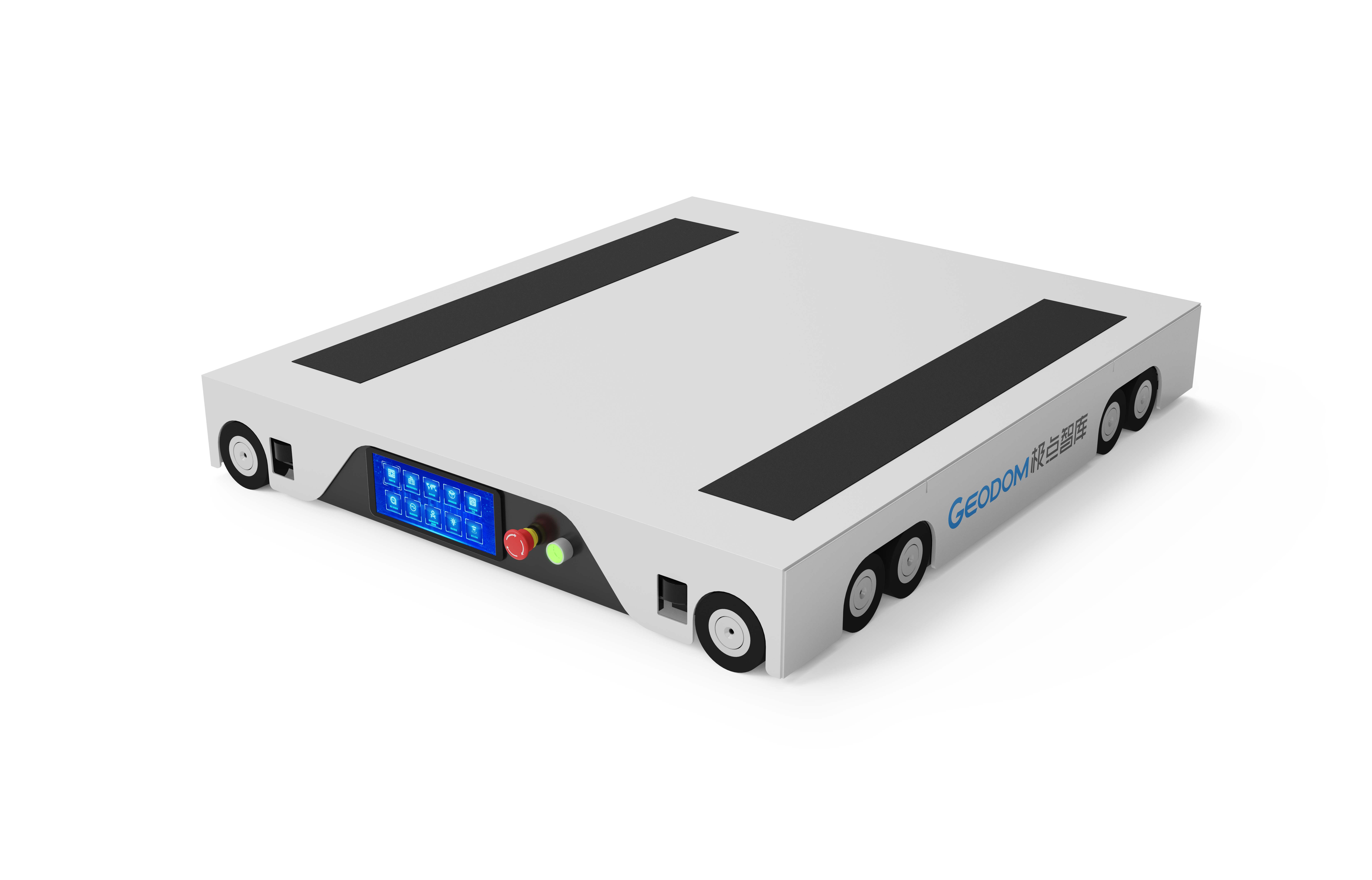
A Four Way Shuttle is an intelligent robotic handling device designed for high-density storage environments. Unlike traditional two-way shuttles (which only move back and forth in a single aisle), a four-way shuttle can travel both longitudinally and transversely across storage rails.
By utilizing a specialized rail network, these robots can switch tracks automatically to reach any storage location within a rack level without the intervention of a forklift. This “grid-based” mobility allows for a massive increase in storage density and operational throughput.
2. How Does a Four-Way Shuttle Work? The Technical Mechanics
The magic of the four-way shuttle lies in its sophisticated mechanical design and its interaction with the warehouse management software.
The Mechanism of Movement
Equipped with two sets of wheel systems—one for the X-axis and one for the Y-axis—the shuttle can lift its chassis slightly to switch between perpendicular rails. This transition is seamless and controlled by precise onboard sensors and encoders.
Intelligent Navigation and Positioning
Modern shuttles utilize Laser SLAM or Barcode/QR Code navigation to maintain sub-millimeter positioning accuracy. Integrated with a Warehouse Control System (WCS), the shuttle receives tasks via Wi-Fi or 5G, calculating the most efficient path to its destination.
Power Management
Most industrial four-way shuttles use high-capacity lithium batteries or supercapacitors. They feature “fast-charging” technology, often docking at charging stations during brief idle periods to ensure 24/7 continuous operation.
3. Key Advantages of Four-Way Shuttle Systems
Why are global logistics hubs transitioning from traditional racking to four-way shuttle AS/RS?
1. Maximum Space Utilization
Traditional forklift aisles consume up to 60% of warehouse floor space. A four-way shuttle system eliminates these aisles, allowing for ultra-high-density storage. In many cases, it can increase storage capacity by 200% to 300% compared to standard selective racking.
2. High Flexibility and Scalability
One of the greatest strengths of the shuttle system is its modularity. If your throughput needs increase, you don’t need to redesign the warehouse; you simply add more shuttle units to the existing rail network.
3. Energy Efficiency and Sustainability
Compared to massive stacker cranes, 4 way pallet shuttle are lightweight and consume significantly less power. Furthermore, they can operate in “dark warehouses” (without lighting or heating/cooling for humans), drastically reducing operational costs.
4. Seamless Integration with AGVs and Forklifts
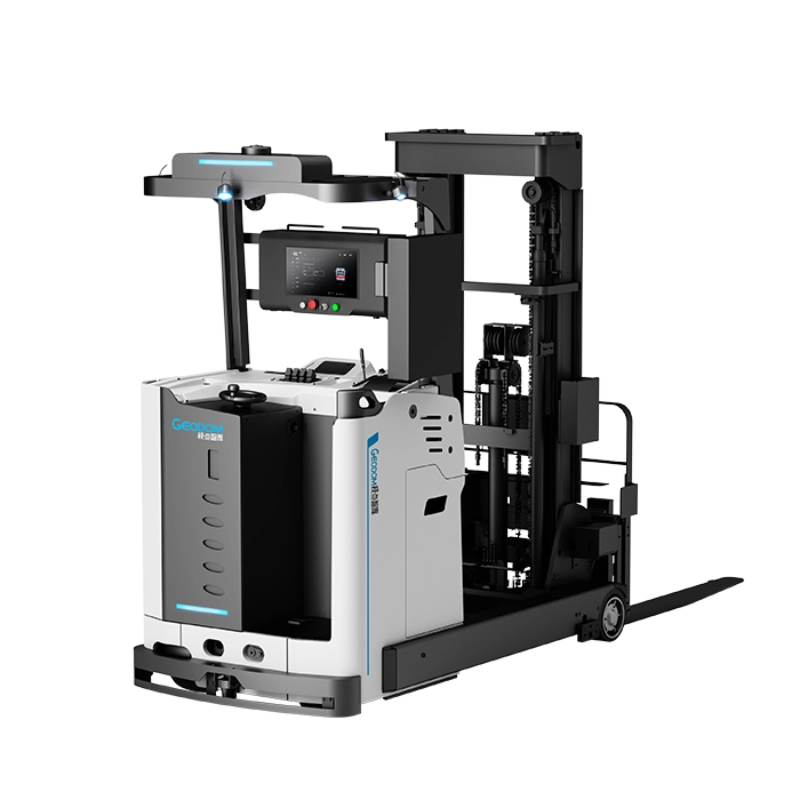
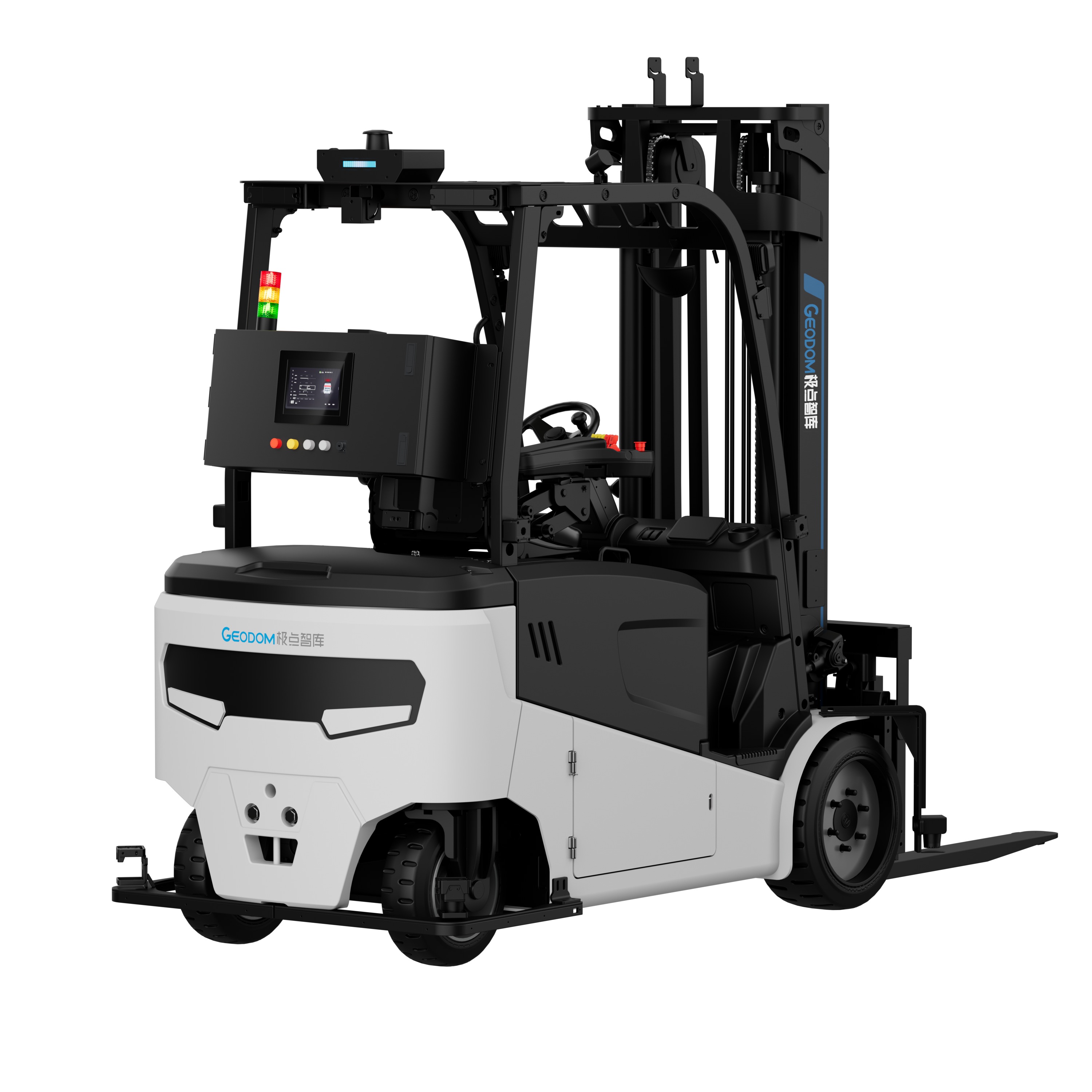
At platforms like AutoFork Robotics, we emphasize the synergy between systems. A four-way shuttle handles the internal “deep storage,” while Autonomous Mobile Robots (AMRs) or Automated Forklifts handle the transport from the rack-face to the shipping dock, creating a fully “lights-out” automation loop.
4. Typical Application Scenarios
The versatility of the four-way shuttle makes it ideal for various industries:
- Cold Chain Logistics: Efficient operation in temperatures as low as -25°C where human labor is difficult.
- E-commerce Fulfillment: Rapid sorting and retrieval of high-SKU inventories.
- Pharmaceuticals: Precise batch control and First-In-First-Out (FIFO) or First-In-Last-Out (FILO) management.
- Automotive Parts: Handling heavy payloads with high frequency.
5. Four-Way Shuttle vs. Stacker Cranes: Which Is Better?
| Feature | Four-Way Shuttle System | Traditional Stacker Crane |
|---|---|---|
| Space Efficiency | Extremely High (Grid-based) | High (Aisle-based) |
| Redundancy | High (If one fails, others take over) | Low (Single point of failure) |
| Building Height | Flexible (Ideal for low/medium) | Optimized for very high (over 20m) |
| Cost of Entry | Modular / Scalable | High Initial Investment |
6. Implementing a Four-Way Shuttle: What to Consider
Before investing in a shuttle system, consider the following factors:
- Payload Requirements: Ensure the shuttle can handle your pallet weights (typical ranges are 1200kg to 1500kg).
- Software Compatibility: The WES (Warehouse Execution System) must be able to communicate flawlessly with your existing ERP.
- Floor Quality: While the shuttle stays on rails, the rack installation requires high precision and a level floor foundation.
Conclusion: The New Standard for Intelligent Logistics
The Four-Way Shuttle represents the pinnacle of high-density, flexible warehouse automation. By decoupling the horizontal and vertical movement (often paired with high-speed lifts), it provides a level of throughput that traditional systems simply cannot match.
As the industry moves toward fully autonomous ecosystems, integrating four-way shuttles with AutoFork’s automated forklifts creates a powerful, end-to-end solution that minimizes errors and maximizes ROI.
Frequently Asked Questions (FAQ)
Q1: Can a Four-Way Shuttle handle different pallet sizes?
A1: Most systems are optimized for standard pallet sizes. However, custom shuttle designs can be engineered to handle non-standard dimensions or specialized bins, provided the rail gauge is adjusted accordingly.
Q2: What scenarios can the four-way shuttle be used in?
A2: Suitable for pallet dense storage, cold chain warehouses, high-level racks, AS/RS, etc.
Q3: Is the Four-Way Shuttle system suitable for FIFO (First-In-First-Out)?
A3: Yes. Unlike traditional drive-in racks which are strictly FILO, a four-way shuttle system can access pallets from different directions and rearrange them internally, making it highly effective for both FIFO and FILO inventory strategies.