What Is the Difference Between a Laser SLAM Four-Wheel Counterbalanced AGV and a Laser SLAM Counterbalanced AGV?
Release time: 2026-07-10
Table of Contents
Laser SLAM four-wheel counterbalanced AGVs and Laser SLAM counterbalanced AGVs are both widely used in modern warehouse and factory material handling. They share the same core advantages, including laser navigation, autonomous mapping, high positioning accuracy, and fully driverless operation. However, they are not the same type of equipment. The main differences lie in their chassis structure, driving performance, load adaptability, and suitable application scenarios.
In simple terms, the Laser SLAM counterbalanced AGV is better suited for general pallet handling and routine warehouse transport, while the four-wheel version is designed for more demanding environments, heavier loads, and more complex operating conditions.
What Is a Laser SLAM Counterbalanced AGV?
A Laser SLAM counterbalanced AGV is a driverless forklift-type vehicle that uses laser navigation to build maps, locate itself, and plan routes autonomously without relying on magnetic strips, tracks, or QR codes. It is commonly used for pallet transport, inbound and outbound logistics, production line transfer, and medium-height stacking tasks.
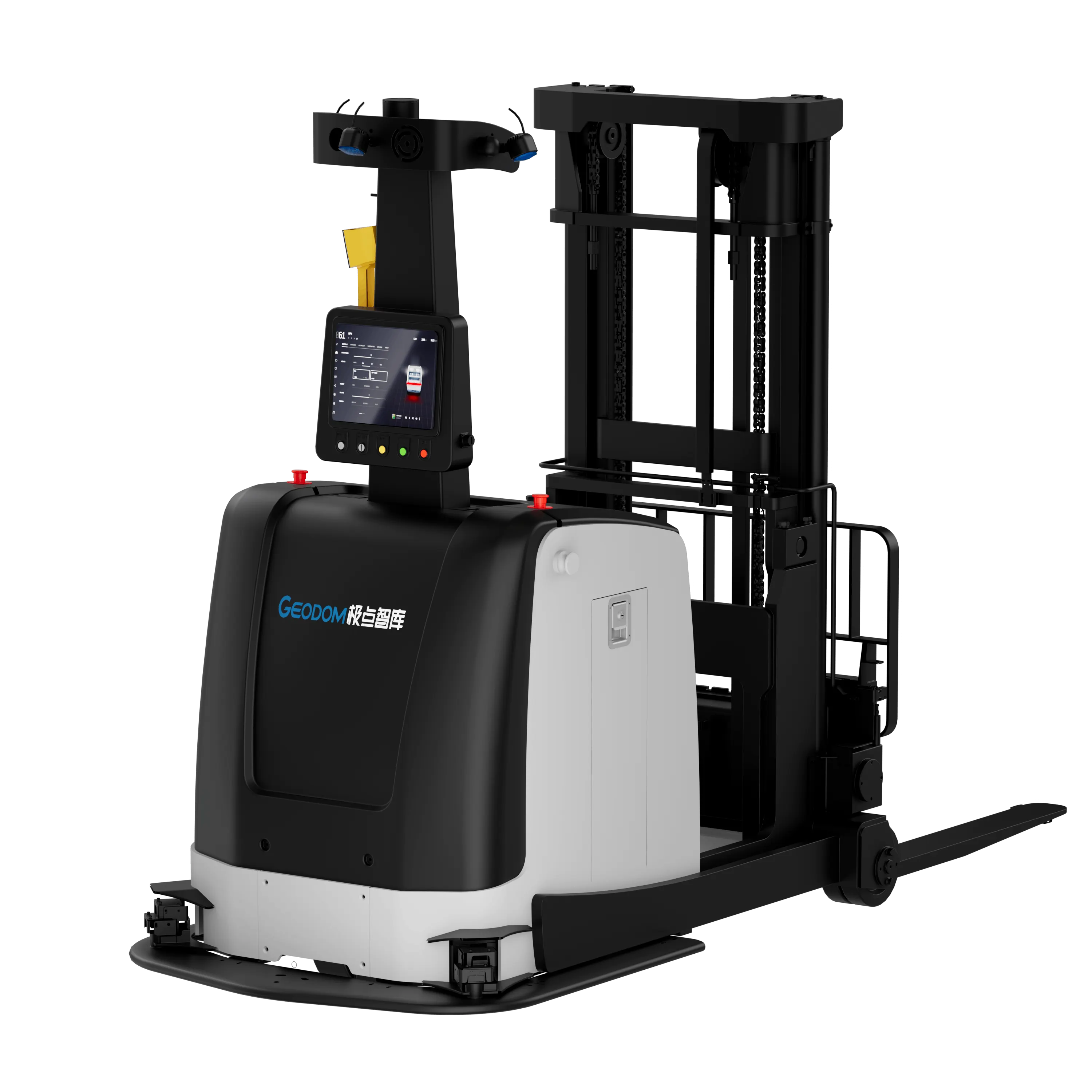
This type of AGV is valued for its flexibility, fast deployment, and strong compatibility with warehouse automation systems. It is especially suitable for factories and warehouses with relatively stable layouts and standardized handling processes.
What Is a Laser SLAM Four-Wheel Counterbalanced AGV?
A Laser SLAM four-wheel counterbalanced AGV is built on a counterbalanced forklift structure but uses a four-wheel chassis design. Compared with the standard version, it places greater emphasis on stability, load support, and adaptability to challenging floor conditions.
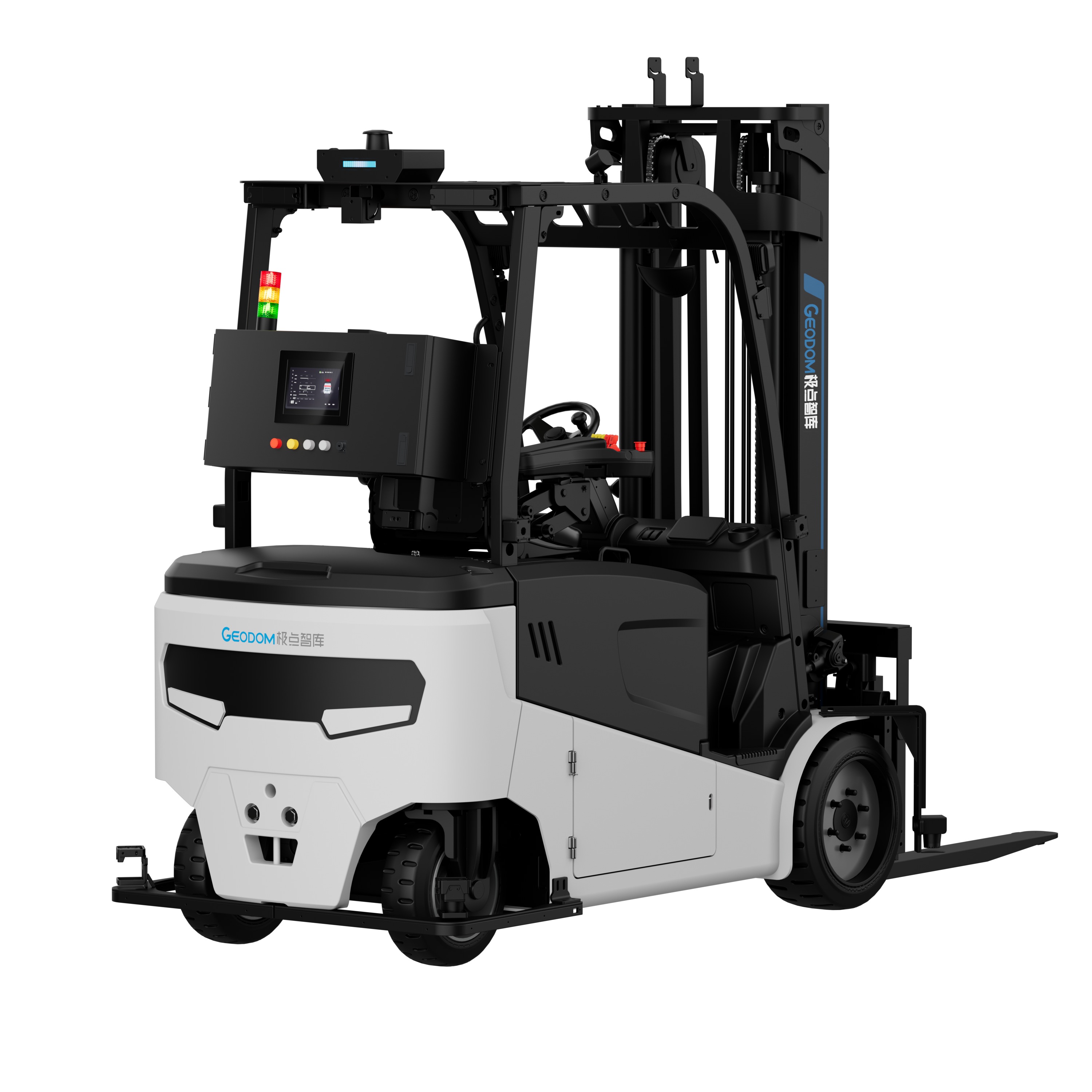
This model is typically better suited for heavy-duty handling, uneven surfaces, ramps, and industrial environments where stability is more important than speed alone. In many cases, it is chosen for more demanding logistics tasks where the AGV must operate reliably under complex conditions.
What Are the Main Differences?
The biggest difference between the two models is not whether they can transport goods, but how their chassis design affects performance and application fit.
1. Chassis Structure
The standard counterbalanced AGV uses a conventional counterbalanced forklift design, making it more universal and suitable for most warehouse handling tasks.
The four-wheel version uses a four-wheel chassis that improves ground contact, stability, and load-bearing performance in more complex environments.
2. Driving Performance
The Laser SLAM counterbalanced AGV can reach a maximum speed of 1.2 m/s, making it more suitable for efficiency-driven transport tasks.
The four-wheel version has a maximum speed of 0.7 m/s, but it offers better stability in demanding working conditions.
3. Suitable Applications
The Laser SLAM counterbalanced AGV is ideal for regular warehouse pallet handling, standardized routes, and common stacking tasks.
The four-wheel version is better for heavy loads, ramps, uneven floors, and industrial sites with more complex operating conditions.
4. Design Priorities
The Laser SLAM counterbalanced AGV focuses more on versatility, deployment efficiency, and system integration.
The four-wheel model focuses more on mechanical stability, traction, and adaptability to difficult work environments.
Which One Is Better for Standard Warehouse Handling?
If your warehouse has flat flooring, standardized pallets, and clearly defined transport routes, the Laser SLAM counterbalanced AGV is usually enough. It works well for pallet transport, production line delivery, and routine logistics turnover, and it can be integrated with WMS, WCS, and MES systems more easily.
For businesses that prioritize fast deployment, standardized operations, and cost-effective automation, the standard version is often the better choice.
Which One Is Better for Heavy-Duty and Complex Conditions?
If your site includes ramps, uneven floors, heavy cargo, or stricter stability requirements, the Laser SLAM four-wheel counterbalanced AGV is the better option. Its four-wheel chassis and rubber tire configuration help improve stability and passability, making it more suitable for industrial environments and complex logistics routes.
This model is especially useful for projects that require continuous operation under demanding conditions, such as heavy material transport and high-frequency automated logistics tasks.
Why Is Laser SLAM Navigation Suitable for Both Models?
Laser SLAM navigation allows AGVs to operate without magnetic strips or fixed tracks. Instead, the vehicle builds its own map, locates itself in real time, and plans routes dynamically.
This makes it ideal for flexible manufacturing and warehouse environments where layouts change often and route adjustments are common. It also reduces the need for floor modifications and speeds up deployment.
What Should You Consider When Choosing?
When selecting between these two AGV models, focus on the following factors:
- Whether the load capacity meets your real handling needs.
- Whether the speed matches your production cycle.
- Whether the floor conditions are flat or complex.
- Whether the pallet dimensions are standardized.
- Whether system integration with WMS, MES, or other software is required.
- Whether your site values stability more than speed.
If you need broader adaptability and stronger performance in difficult conditions, the four-wheel model is safer. If you need efficient handling in a standard warehouse environment, the regular counterbalanced AGV is usually sufficient.
What Geodom Can Offer
Geodom provides intelligent logistics handling solutions tailored to real-world industrial needs. Based on your site conditions, cargo type, and transport rhythm, we can recommend the most suitable Laser SLAM counterbalanced AGV solution.
Whether you need standard warehouse handling or a more rugged solution for heavy-duty applications, we can help you evaluate structure, navigation, system integration, and scalability to ensure the model you choose can operate reliably in your actual working environment.
Conclusion
Although the Laser SLAM four-wheel counterbalanced AGV and the Laser SLAM counterbalanced AGV look similar, they are designed for different priorities. The four-wheel model is better for complex conditions and heavy-duty tasks, while the Laser SLAM counterbalanced AGV is better for standard warehouse handling and high-efficiency transport.
Choosing the right model is what allows Laser SLAM navigation to deliver its true value: flexibility, accuracy, and automation efficiency.