Application of Omnidirectional AGV in Narrow Aisle Warehousing: How to Maximize Warehouse Density
Release time: 2026-06-12
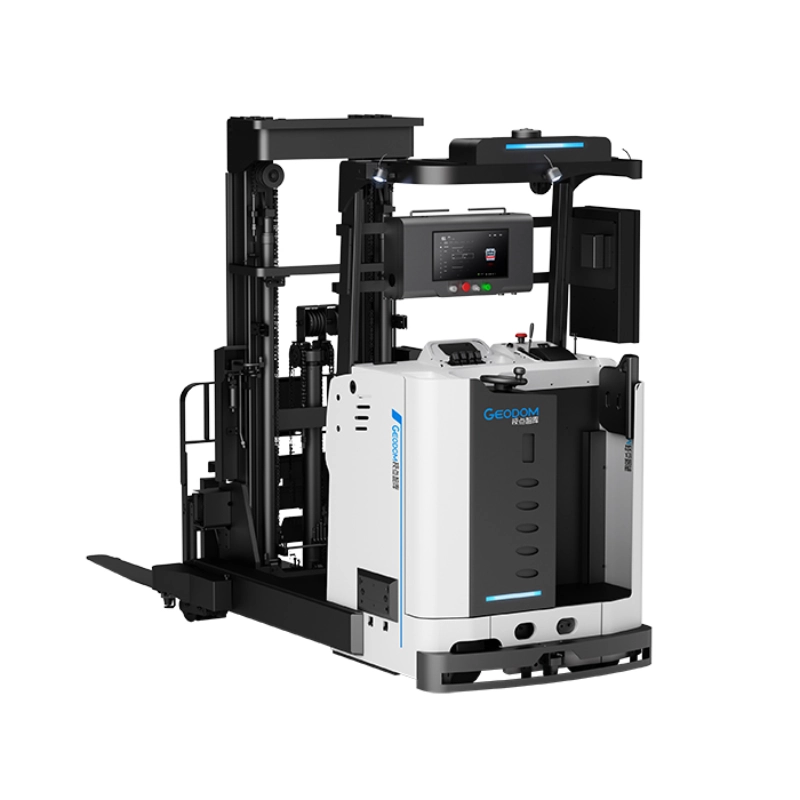
With the rapid growth of e-commerce, cold chain logistics, and manufacturing, warehouse space costs continue to rise. Businesses are increasingly demanding high-density storage combined with high-efficiency operations. In this context, omnidirectional AGVs (Automated Guided Vehicles) are becoming a key solution for upgrading narrow aisle warehouse systems.
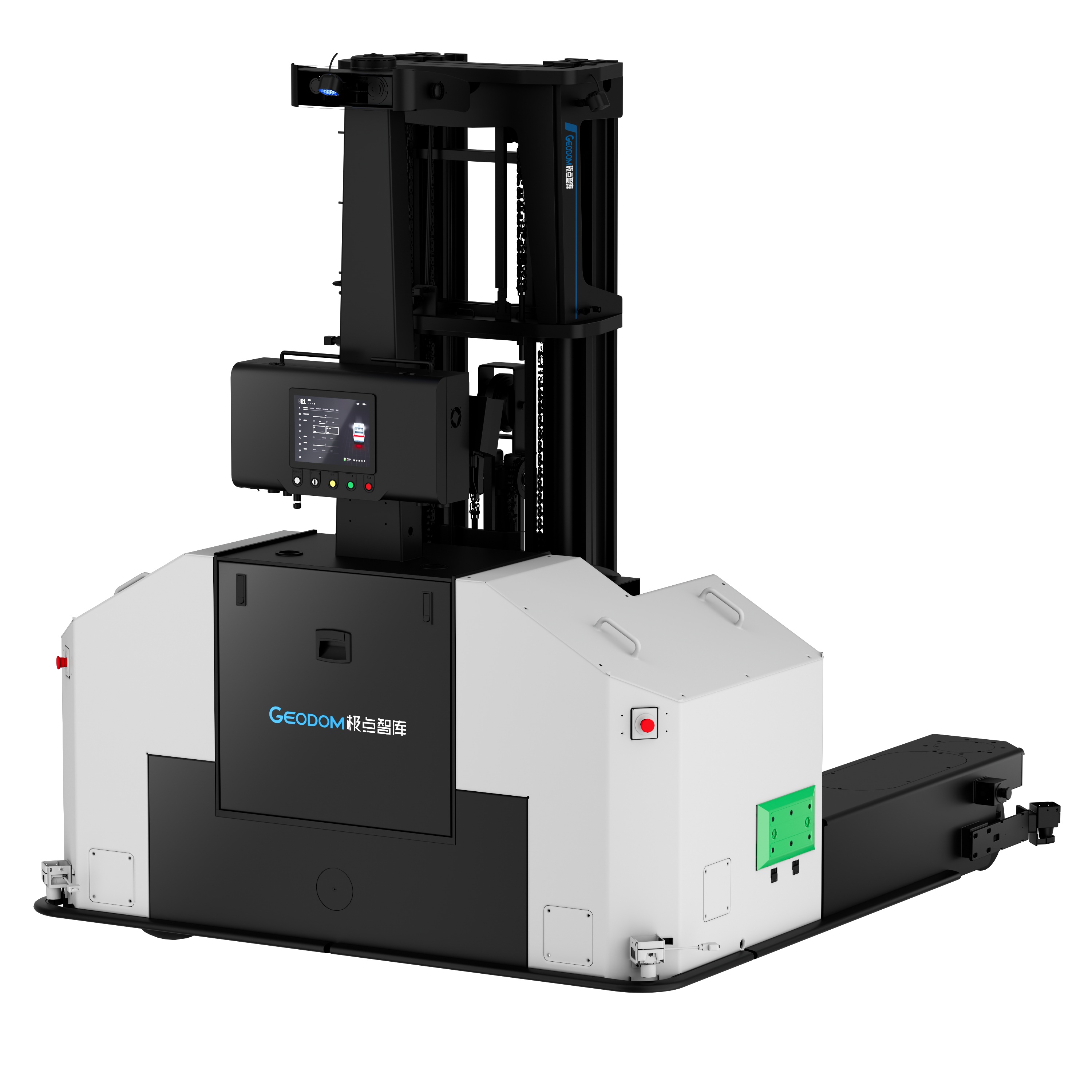
So, how exactly do omnidirectional Automated Guided Vehicles help maximize warehouse density? This article provides a comprehensive analysis of their working principles, core advantages, application scenarios, and real-world value.
Table of Contents
What is an Omnidirectional AGV?
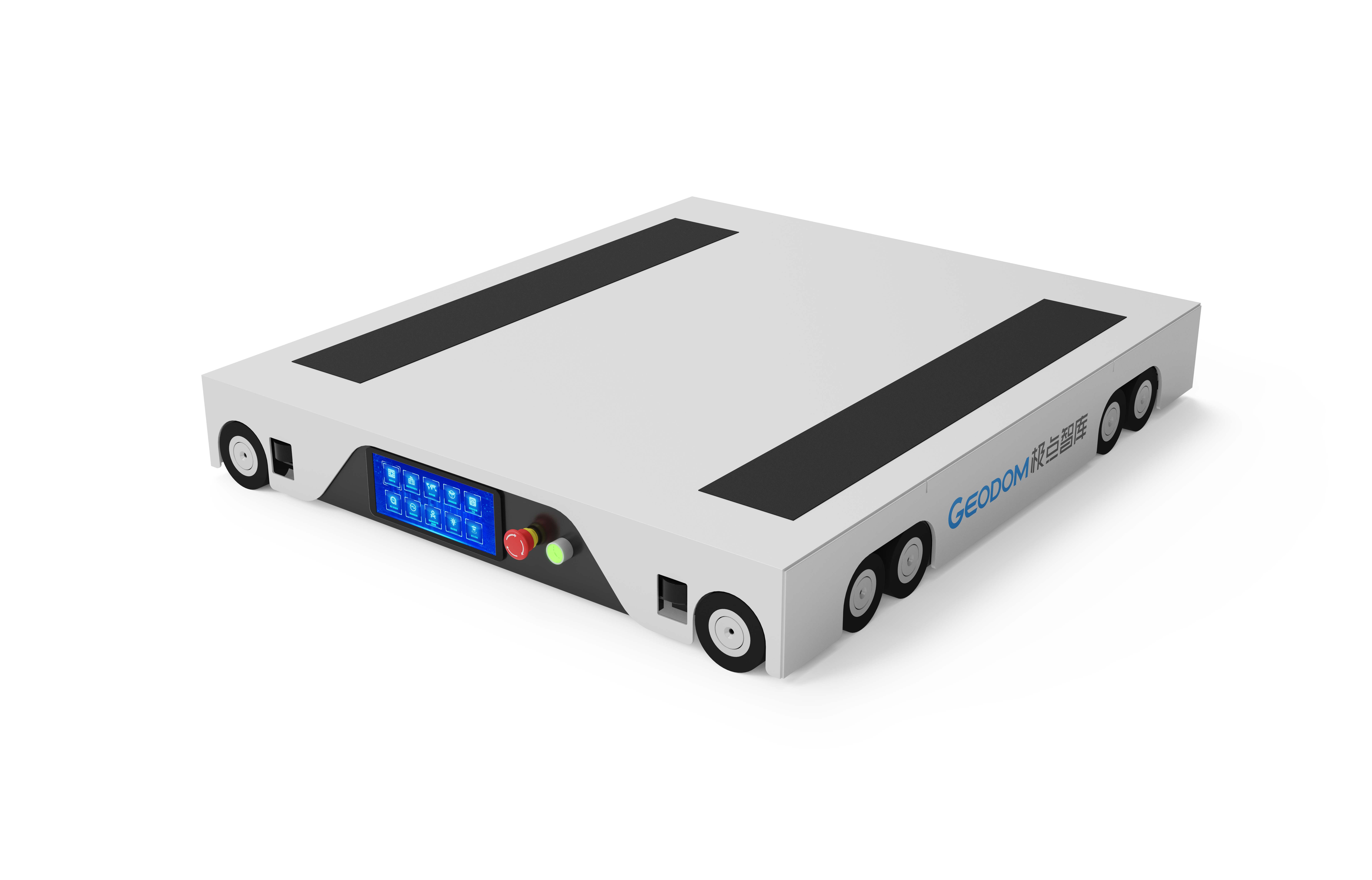
An omnidirectional AGV is an intelligent material handling robot capable of moving freely in multiple directions. Compared with traditional forklifts or standard AGVs, it offers:
| Feature | Traditional Forklift/AGV | Omnidirectional AGV |
|---|---|---|
| Movement Direction | Forward/backward, large turning radius | Forward, backward, lateral movement, in-place rotation |
| Turning Space | Requires ≥3.5m aisle width | No large turning space required |
| Positioning Accuracy | ±10mm | ±2–5mm high precision |
| Navigation Method | Ground markers or fixed tracks | Laser SLAM (no markers required) |
| Minimum Aisle Width | 3.5–4m | 1.6–2.0m |
These features make it highly suitable for narrow aisle and high-density warehouse environments.
Geodom omnidirectional AGVs utilize advanced laser SLAM navigation, enabling 360° obstacle avoidance, dynamic path planning, and millisecond-level response—making them ideal for warehouse automation.
Key Challenges in Narrow Aisle Warehousing
Traditional warehouse operations face several limitations:
1. Large Aisle Space Occupation
Conventional forklifts require aisles wider than 3.5 meters, meaning 30–40% of warehouse space is lost to aisles.
2. Limited Operational Efficiency
Manual operations depend on operator experience, lack consistency, and cannot support 24/7 continuous work.
3. High Safety Risks
Operating heavy equipment in tight spaces increases collision risks. Studies show that about 60% of warehouse accidents are equipment-related.
4. Difficulty in Increasing Storage Density
Due to turning radius limitations, rack spacing cannot be further reduced.
How Omnidirectional AGVs Maximize Warehouse Density
1. Significantly Reduce Aisle Width
Omnidirectional AGVs operate efficiently within 1.6–2.0m narrow aisles, saving approximately 30%–50% of space compared to traditional forklifts.
This directly increases storage capacity.
2. Enable High-Density Rack Layouts
With precise positioning and lateral movement:
- Racks can be arranged more compactly
- Redundant aisles are eliminated
- Space utilization increases from 60–70% to 85–90%
- Suitable for high racking systems (6m–15m)
Ideal for industries with high SKU density such as e-commerce and cold chain.
3. Improve Throughput and Efficiency
Integrated with WMS/WCS systems, omnidirectional AGVs provide:
- Automated task scheduling
- Real-time route optimization
- 24/7 continuous operation
Even in high-density environments, throughput remains high, with cycle time reduced by ~28%.
4. Reduce Labor and Safety Risks
- Labor costs reduced by ~45%
- Human error minimized, improving inventory accuracy
- Equipped with 360° laser safety systems
Overall warehouse safety improves, with accident rates reduced by ~40%.
Typical Application Scenarios
| Industry | Key Requirements | AGV Value |
| E-commerce Warehousing | High SKU, high-frequency orders | +40% storage density, +30% order processing speed |
| Cold Chain Logistics | High space cost, dense storage | +42% storage density, +28% inventory accuracy |
| Manufacturing Warehouses | Automated material handling | -35% handling time, +25% efficiency |
| Food & Pharmaceutical | High compliance requirements | +35% labor reduction, better traceability |
How to Achieve Maximum Warehouse Density
To fully leverage omnidirectional AGVs, a holistic approach is required:
1. Optimize Racking System
Design high-density racking based on product dimensions and maximize vertical space (6m–15m).
2. Integrate Smart Warehouse Systems
Use WMS/WCS for intelligent scheduling and real-time control.
3. Optimize Logistics Flow
Reduce unnecessary travel distances, improving efficiency by ~20%.
4. Customize AGV Solutions
Select appropriate specifications based on needs:
- Load capacity: standard 1500kg (customizable)
- Lifting height: 120mm to 4m
- Navigation: Laser SLAM (no floor modification required)
Why Choose Geodom Omnidirectional AGV Solutions?
Geodom provides a complete solution for narrow aisle warehouse automation:
| Advantage | Description |
| High-precision navigation | Laser SLAM with ±2–5mm accuracy |
| Narrow aisle operation | Works in 1.6–2.0m aisles with 6–15m racks |
| Customizable configurations | Load, lifting height, and system options |
| Full system integration | Seamless WMS/WCS connectivity |
| Global support | 24/7 service, deployment in 1–2 weeks |
Helping customers maximize space utilization and operational efficiency, with a typical ROI period of 12–18 months.
Geodom Omnidirectional AGV Key Specifications
| Parameter | Specification |
| Load Capacity | 1500 kg |
| Navigation | Laser SLAM |
| Positioning Accuracy | ±2–5 mm |
| Max Speed | 1.2 m/s |
| Minimum Aisle Width | 1.6–2.0 m |
| Operation Time | 6–8 hours |
| Deployment Time | 1–2 weeks (10+ units) |
Conclusion
As warehouse costs continue to rise, improving storage density has become a critical competitive advantage. With their flexibility, efficiency, and intelligent capabilities, omnidirectional AGVs are transforming narrow aisle warehouse operations.
For companies seeking automation upgrades and space optimization, investing in omnidirectional AGVs is not just a technological improvement—it’s a strategic move toward long-term cost reduction and efficiency gains.
Get a Customized Solution
If you are planning a narrow aisle warehouse project, contact Geodom:
- Customized AGV solutions
- Warehouse layout optimization
- Automation system integration
Let your warehouse achieve higher density, higher efficiency, and smarter operations.