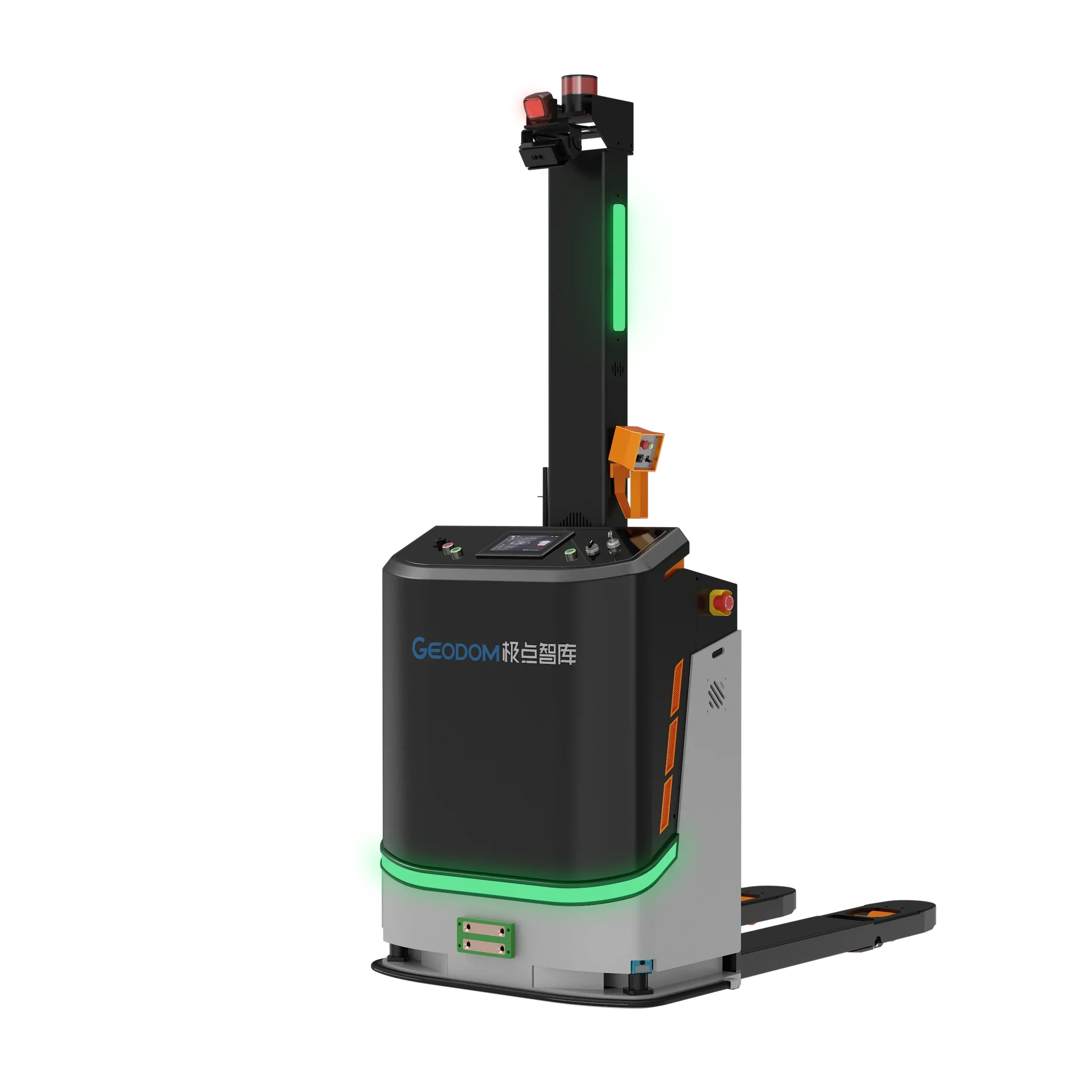
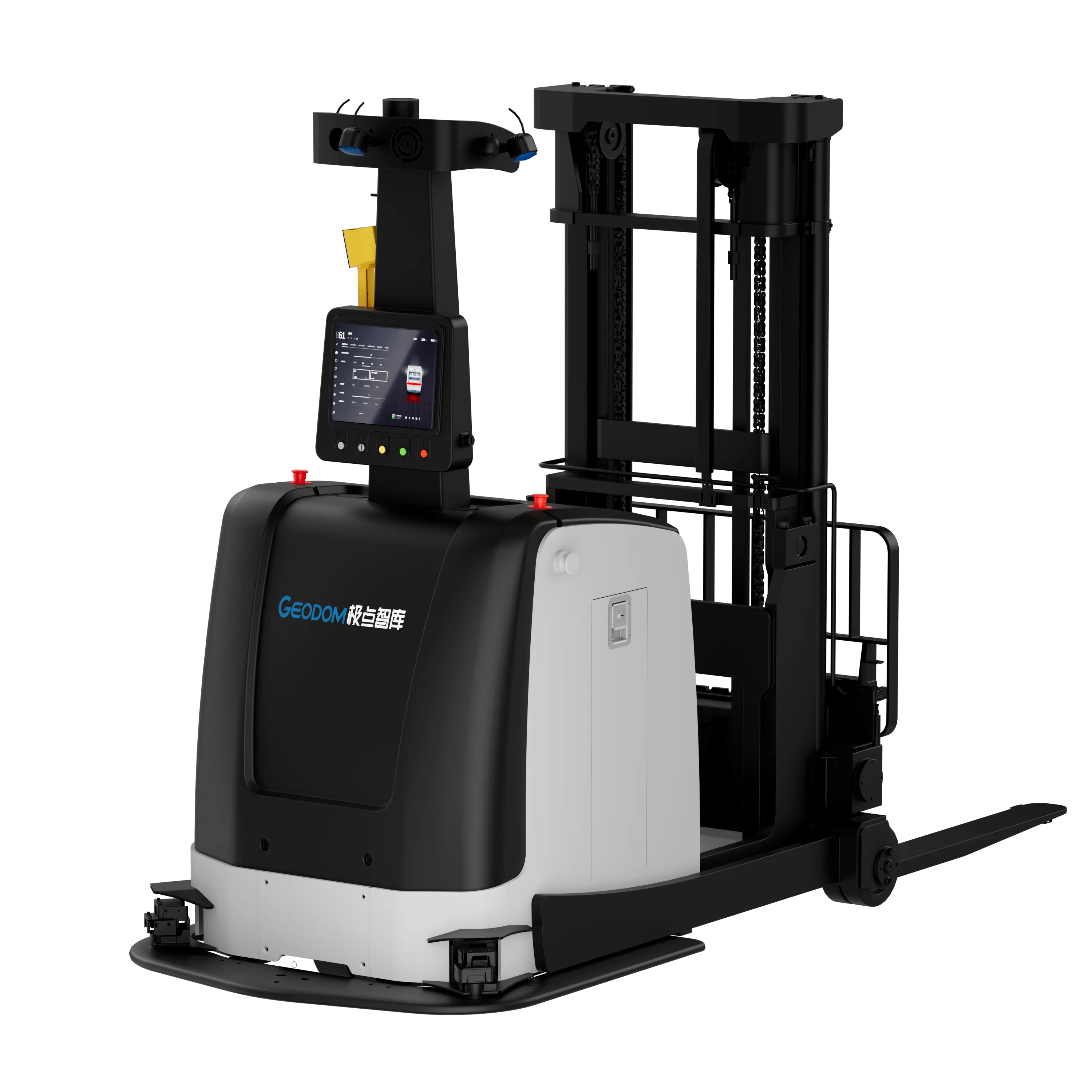
5 Key Factors to Consider When Buying a Reach Truck AGV
Release time: 2026-08-20
As warehouse automation continues to expand, Reach Truck AGVs are becoming an important solution for high-density pallet storage, narrow-aisle operations, and automated material handling. Compared with traditional reach trucks, a Reach Truck AGV can combine high-level pallet handling with autonomous navigation and intelligent task execution.
However, purchasing a Reach Truck AGV is not simply about selecting the vehicle with the highest lifting capacity or the lowest price. The right solution needs to match the warehouse layout, pallet specifications, storage requirements, automation system, and expected operating conditions.
Here are five key factors to consider when buying a Reach Truck AGV.
1. Load Capacity and Lifting Height
Load capacity and lifting height are the first specifications to evaluate.
A Reach Truck AGV needs to safely handle the actual pallet weight at the required storage height. Buyers should therefore look beyond the maximum rated capacity and consider the relationship between load capacity, load center, lifting height, and residual capacity.
For high-bay warehouses, the required lifting height can have a significant impact on vehicle performance. The equipment should be selected according to the actual pallet weight and rack height rather than based only on the maximum specifications listed in a product brochure.
Pallet dimensions are also important. Oversized or non-standard pallets may require specific fork configurations or positioning capabilities.
Before purchasing, it is recommended to define the actual operating requirements, including pallet weight, pallet size, rack height, storage configuration, and expected pallet throughput.
2. Vehicle Size and Narrow-Aisle Requirements
Warehouse space is one of the most important factors when implementing automated material handling.
Reach Truck AGVs are commonly used in narrow-aisle and high-density storage environments, so vehicle dimensions need to be carefully matched with the warehouse layout.
Important considerations include vehicle width, turning radius, mast configuration, fork dimensions, reach distance, and required safety clearance.
The objective should not simply be to select the smallest AGV. Instead, the equipment needs to achieve a balance between compact operation, pallet handling performance, storage density, and safety.
A detailed analysis of the existing rack layout and aisle dimensions can help determine whether a particular Reach Truck AGV is suitable for the facility.
3. Navigation and Pallet Positioning Accuracy
Navigation technology is one of the most important components of a Reach Truck AGV.
Unlike a traditional forklift operated directly by a driver, an AGV needs to determine its position, plan its movement, identify obstacles, and accurately complete pallet handling tasks without continuous manual control.
Depending on the system design, Reach Truck AGVs may use technologies such as laser navigation, SLAM, visual perception, or multi-sensor fusion.
However, navigation technology should not be evaluated independently. For pallet storage applications, positioning accuracy and repeatability are equally important.
The vehicle needs to approach racks accurately, align with pallet locations, and complete insertion and retrieval operations consistently. Reliable positioning can help reduce pallet placement errors, rack impact risks, and unnecessary operational interruptions.
4. System Integration and Intelligent Fleet Management
A Reach Truck AGV should not be viewed as an independent forklift. In an automated warehouse, it usually operates as part of a larger material handling system.
Before purchasing, businesses should consider whether the AGV can communicate with existing or planned systems such as:
- Warehouse Management System (WMS)
- Warehouse Control System (WCS)
- Fleet Management System
- Automated Storage and Retrieval System (AS/RS)
- Conveyors
Effective integration allows warehouse systems to assign transportation tasks, monitor equipment status, optimize vehicle scheduling, and coordinate material flow.
For warehouses with multiple autonomous vehicles, fleet management becomes particularly important. Intelligent scheduling can reduce unnecessary travel, avoid traffic congestion, and improve the utilization of the entire AGV fleet.
5. Safety, Reliability, and Total Cost of Ownership
Safety and long-term reliability should be considered alongside technical specifications.
A Reach Truck AGV may operate around employees, racks, pallets, other vehicles, and automated equipment. Therefore, it should incorporate appropriate safety technologies such as obstacle detection, safety sensors, emergency stopping, speed management, and collision avoidance.
At the same time, buyers should evaluate the manufacturer’s reliability and service capabilities. Factors such as commissioning, preventive maintenance, spare parts availability, software updates, and technical support can have a significant impact on long-term equipment performance.
The purchase price is also only one component of the overall investment. Total cost of ownership (TCO) may include the vehicle, software, installation, commissioning, charging infrastructure, maintenance, spare parts, and system integration.
A Reach Truck AGV with a higher initial price may provide better long-term value if it delivers greater productivity, lower labor dependency, and more reliable operation.
Conclusion
Choosing a Reach Truck AGV requires a comprehensive evaluation of handling performance, vehicle dimensions, navigation accuracy, system integration, safety, reliability, and long-term operating costs.
For high-density warehouses, the right automated reach truck can do more than automate pallet movement. It can become an important part of a connected warehouse automation system, helping businesses improve storage utilization, reduce repetitive manual operations, and build a more scalable material handling infrastructure.
By selecting equipment based on actual warehouse requirements and future automation goals, companies can achieve greater value from their Reach Truck AGV investment.
Looking for the right Reach Truck AGV for your warehouse? Contact Geodom to discuss your application requirements and explore a customized automated material handling solution.