How 4 Way Shuttle Improves Pallet Handling in Automated Warehouses
Release time: 2026-09-17
Table of Contents
Moving pallets efficiently is just as important as storing them. In an automated warehouse, delays can occur when pallets have to follow fixed routes, when several vehicles compete for the same path, or when manual intervention is still needed for routine handling tasks.
A 4 Way Shuttle takes a different approach. It can move forward, backward, left, and right, giving it more freedom to move within a storage system. This makes it useful for pallet handling applications where the warehouse needs automated movement as well as organized storage.
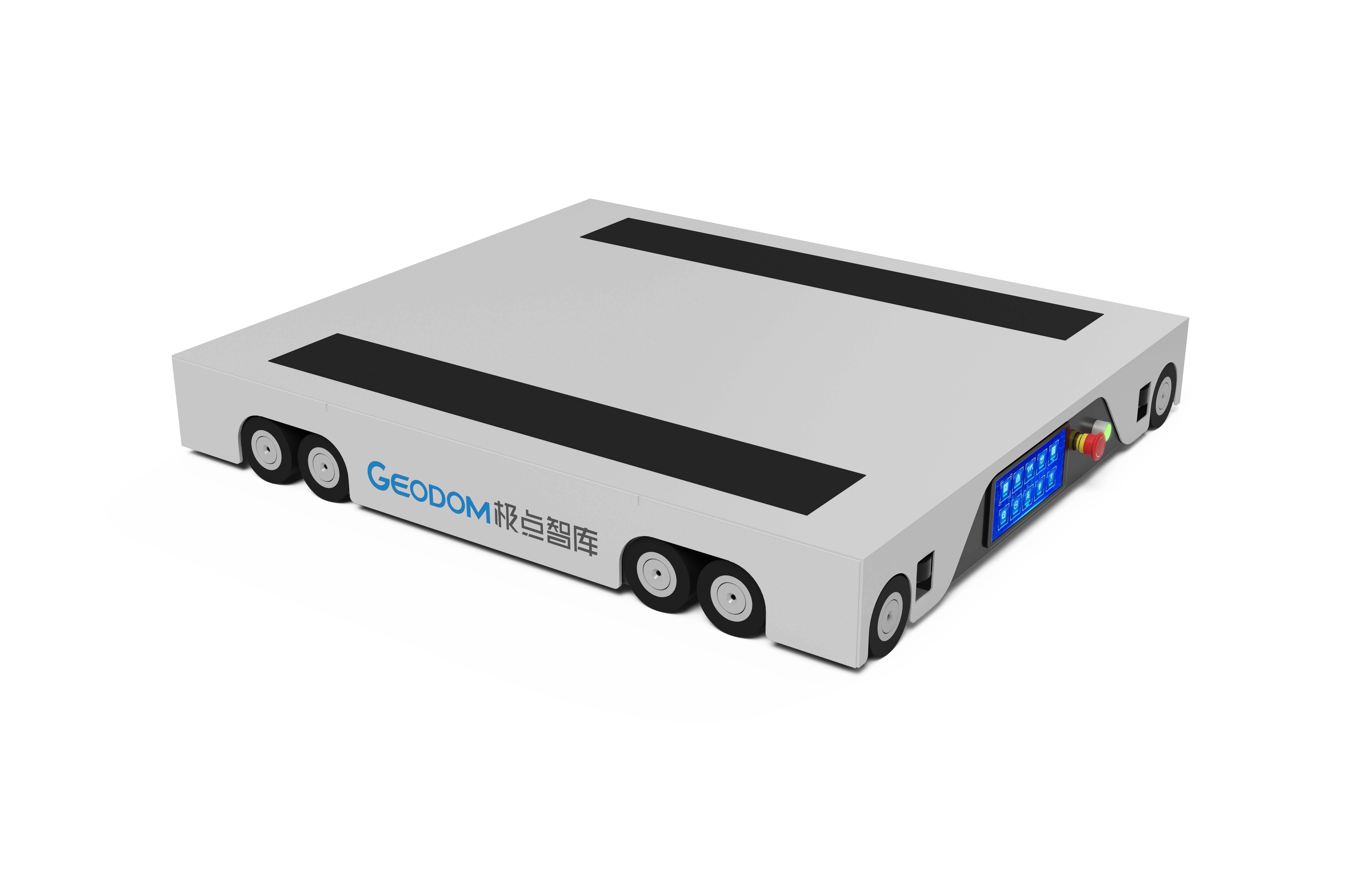
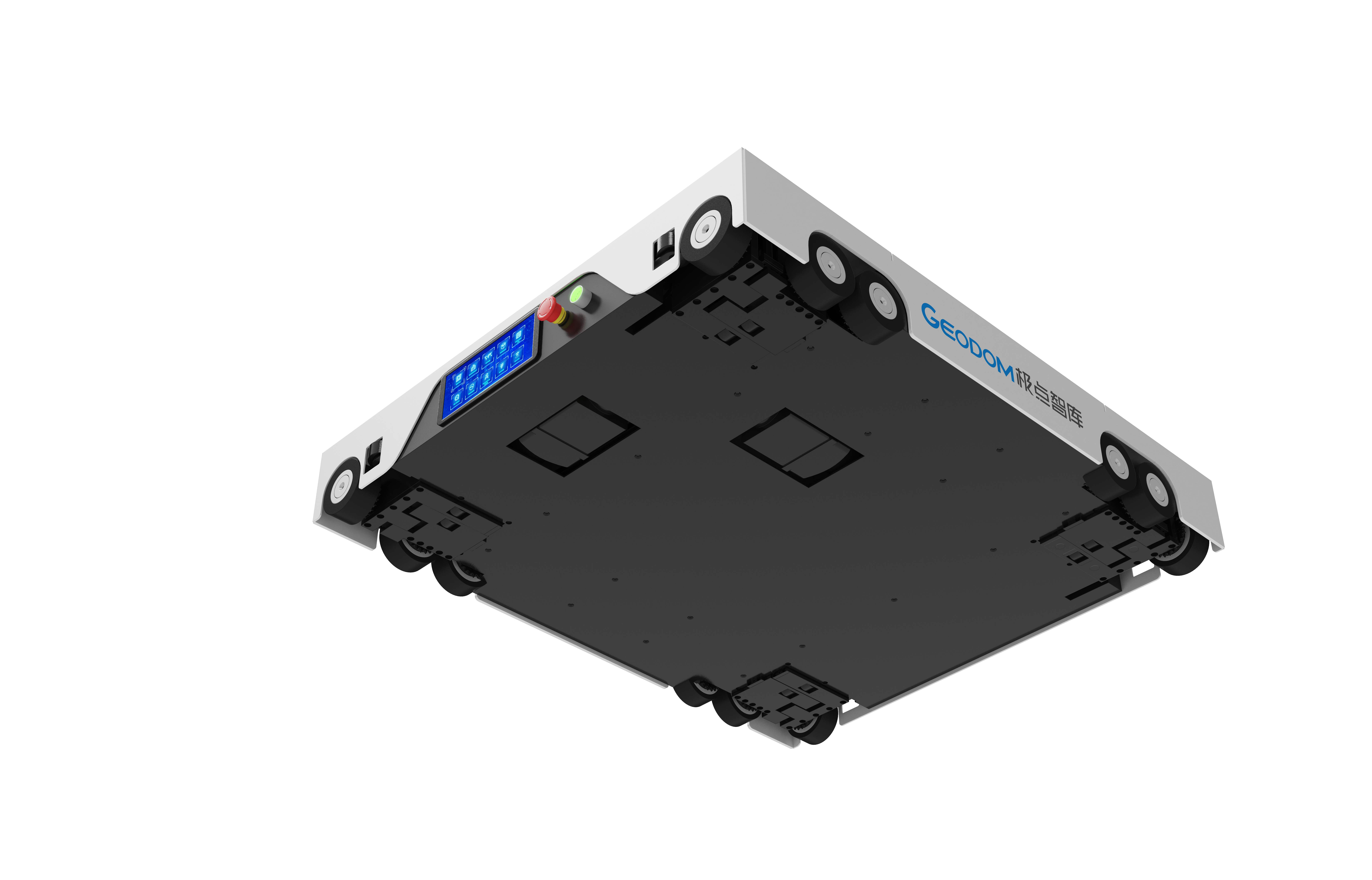
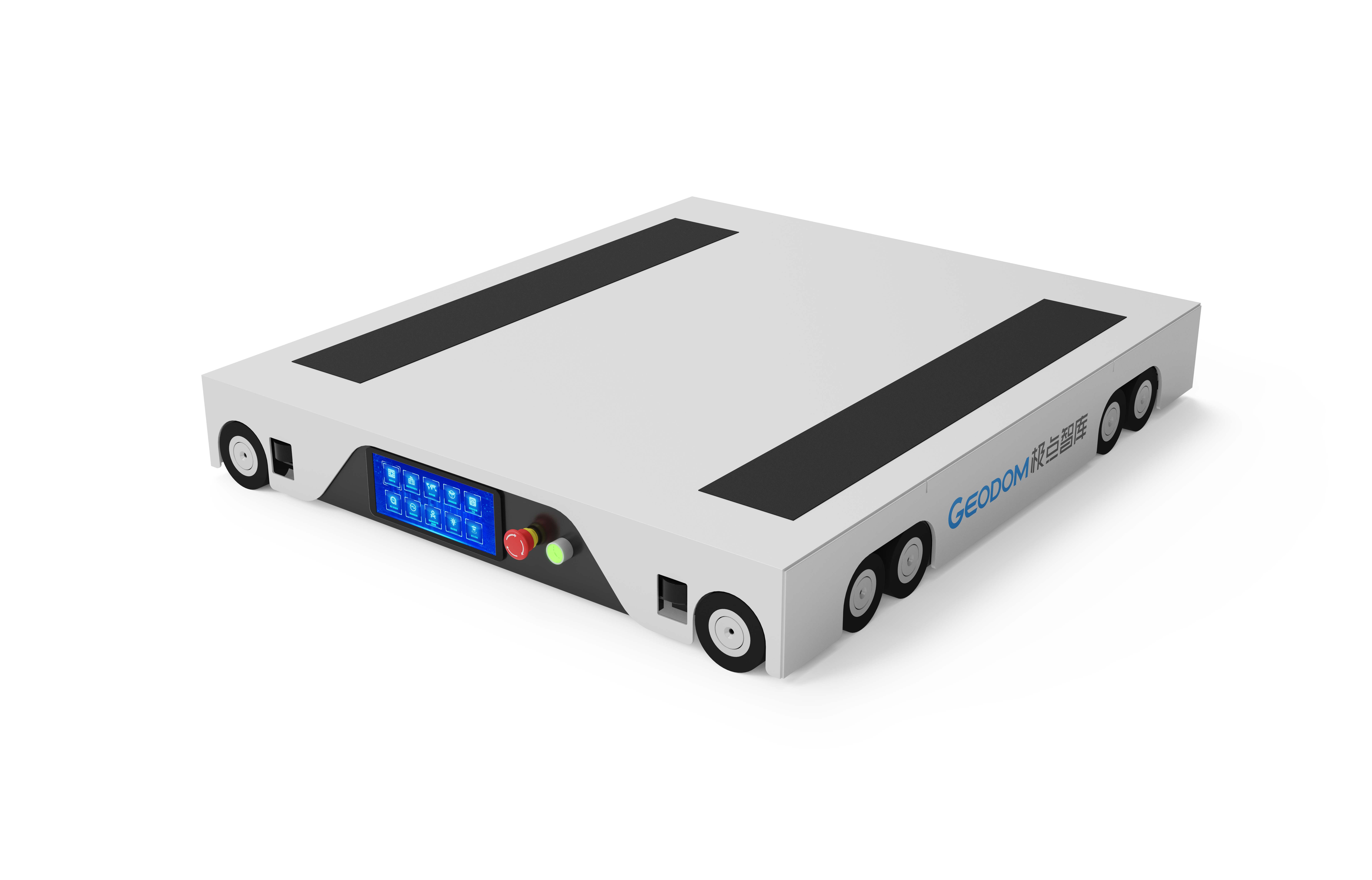
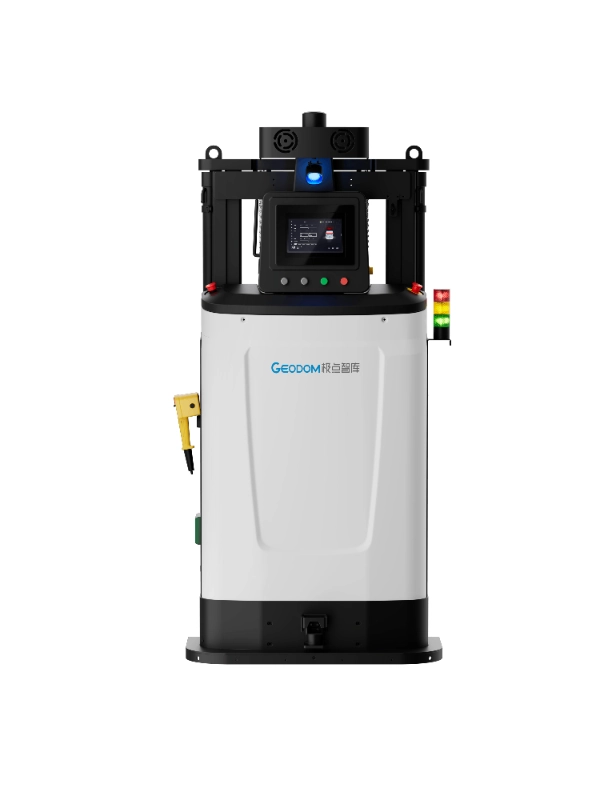
Geodom’s four-way shuttle is designed for pallet handling and can connect with WMS and WCS systems. It also supports multi-vehicle collaboration, automatic path planning, and obstacle avoidance, making it suitable for automated warehouse environments where several handling tasks need to be coordinated.
Pallet Handling Requires More Than Simple Transportation
In a conventional warehouse, a pallet may be moved several times before it reaches its final storage position or shipping area. Forklifts and other handling equipment need to follow available aisles, and the route can become less efficient when several tasks need to be completed at the same time.
Automation changes the way these movements can be organized.
Instead of relying on a single fixed travel direction, a four-way shuttle can change direction within the storage structure. This gives the warehouse more options when moving pallets between storage positions.
For operations with a large number of pallet movements, the main benefits come from how the equipment works as part of the wider warehouse system rather than from vehicle movement alone.
Four-Direction Movement Gives Pallet Handling More Options
The defining feature of a four way shuttle system is its ability to travel in four directions.
Forward and backward movement allows the shuttle to handle pallets along its current route, while left and right movement allows it to change direction within the storage structure. This can reduce the limitations associated with equipment that is restricted to a single lane or travel direction.
For warehouse operators, this can be useful when:
- Pallets need to be moved between different storage positions.
- Several shuttle vehicles operate within the same warehouse.
- The storage system needs coordinated vehicle movement.
- Pallet handling is linked with automated warehouse management.
- The warehouse needs to reduce reliance on manual pallet movement.
The goal is not simply to make the vehicle move faster. It is to give the handling system more ways to manage pallet movements.
Coordinated Movement for Automated Warehouse Operations
A warehouse with several automated vehicles needs more than individual vehicles that can move independently. Their movements need to be coordinated to avoid unnecessary waiting and conflicts.
Geodom’s four-way shuttle supports multi-vehicle collaborative operation. Its control functions include automatic path planning and obstacle avoidance, allowing different vehicles to work within the same automated storage environment.
The product is also designed to connect with WMS and WCS. This allows warehouse management and control systems to communicate with the handling equipment rather than treating each pallet movement as an isolated task.
For companies already operating automated warehouses, this type of system compatibility is worth checking before purchasing new handling equipment.
Key Product Specifications
The actual requirements of a warehouse vary from one application to another, so equipment specifications should be checked against the pallet and operating conditions.
| Item | Specification |
| Product Type | Four-Way Shuttle |
| Rated Load | 1,200–2,000 kg |
| Positioning Accuracy | ±1 mm |
| Speed, Full / Empty | 1.6 / 1.2 m/s |
| Direction Change Time | 2.5 seconds |
| Lifting Time | 1.5 seconds |
| Operating Temperature | -25°C to 45°C |
| Working Time | 8–10 hours |
| Battery | 51.2V 40Ah LiFePO4 |
| Drive Mode | Servo Drive |
| Positioning | RFID + Magnetic Induction + Odometer |
| Communication | WMS/WCS Integration |
| Certification | CE, UL |
The rated load of 1,200–2,000 kg covers a range of pallet handling requirements, while the positioning accuracy of ±1 mm supports precise movement within the storage system. The operating temperature range also makes the equipment suitable for applications that require operation in colder warehouse environments.
Throughput Depends on More Than Vehicle Speed
When evaluating pallet handling equipment, buyers often look first at travel speed. Speed matters, but it is only one part of actual warehouse throughput.
A shuttle may need to:
- Receive a movement instruction.
- Travel to the required position.
- Pick up or place the pallet.
- Change direction when required.
- Continue to the next position.
- Return or receive another task.
The time required for each step affects the overall number of pallet movements the system can complete.
According to Geodom’s product information, its four-way shuttle can achieve 80–120 inbound and outbound operations per hour per vehicle, depending on operating conditions.
For procurement teams, this figure is more useful when compared with actual warehouse demand. Average daily movements, peak-hour requirements, pallet weight, storage layout, and the number of vehicles planned for the system all need to be considered together.
Automatic Charging Helps Reduce Routine Interruptions
Battery management is another practical part of automated pallet handling.
Geodom’s four-way shuttle uses a 51.2V 40Ah LiFePO4 battery and supports automatic charging. The product information states a battery cycle life of more than 2,000 cycles.
Automatic charging means the shuttle can return to the charging area when its power is low rather than relying on an operator to handle the charging process manually.
For warehouses running repeated pallet movements throughout the day, this can simplify routine operation and reduce one more manual task from the handling process.
Where 4 Way Shuttle Fits into Warehouse Operations
A 4 way shuttle system can be considered for several types of automated pallet handling environments.
Cold Chain
Cold storage presents additional equipment requirements because handling equipment must work under low temperatures. Geodom’s four-way shuttle has an operating temperature range of -25°C to 45°C, making it suitable for temperature-controlled applications.
Food Warehousing
Food warehouses often handle large volumes of palletized products and need organized storage and retrieval. Automated pallet movement can help connect storage activities with the wider warehouse operation.
Pharmaceutical Storage
Pharmaceutical warehouses can require controlled storage conditions and organized pallet handling. A shuttle-based system can be used where automated storage and retrieval are part of the warehouse design.
Manufacturing
Manufacturing warehouses may handle raw materials, components, and finished products at different stages. A flexible pallet handling system can support movement between storage and production-related areas.
The specific configuration still needs to be matched with pallet dimensions, load requirements, storage layout, and the expected movement volume.
What Information Should Be Prepared Before Purchasing?
A supplier can only evaluate a shuttle system properly when the warehouse requirements are clear. Before requesting a quotation, it is useful to prepare several basic pieces of information.
Pallet Size and Weight
Provide the pallet dimensions and maximum loaded weight. If several pallet sizes are used, include the full range rather than only the most common specification.
Storage Layout
Rack dimensions, storage depth, available space, and the number of required pallet positions can affect the system configuration.
Movement Volume
Provide average inbound and outbound pallet movements, as well as peak-period requirements. Peak demand can be particularly important when determining the number of vehicles required.
Operating Environment
Specify whether the system will operate at room temperature, in cold storage, or across different temperature zones.
Existing Warehouse Systems
If WMS, WCS, AGVs, stackers, or other automated equipment are already installed, their interfaces and operating relationships should be considered before introducing new equipment.
These details give suppliers a much clearer picture of the actual application than a simple request for a shuttle price.
Why System Compatibility Matters
A shuttle does not operate in isolation in a fully automated warehouse. It is part of a larger material-handling process.
Geodom’s product information specifies WMS and WCS integration, while the system can also cooperate with other warehouse equipment such as AGVs and stackers.
This matters when a company is expanding an existing automated warehouse. The question is not only whether a new shuttle can handle the pallet. It is also whether the equipment can communicate with the warehouse’s existing control structure and work alongside other automated devices.
Geodom Think Tank Intelligent Equipment Co., Ltd. has technical capabilities in industrial automation control, AGV unmanned driving navigation control, vision development, and AI application development. The company reports more than 100 employees, including more than 40 R&D personnel. Its development history also includes AGV and automated warehouse projects.
FAQ
1. What is a 4 Way Shuttle used for?
A 4 Way Shuttle is designed for automated pallet storage and handling. Its four-direction movement allows it to work within storage systems where flexible pallet movement is required.
2. What is the rated load of the Geodom shuttle?
The rated load is 1,200–2,000 kg. The actual requirement should be confirmed according to the maximum loaded pallet weight.
3. Can the shuttle operate in cold storage?
Yes. The stated operating temperature range is -25°C to 45°C.
4. Can multiple shuttles work together?
Yes. The product supports multi-vehicle collaborative operation, along with automatic path planning and obstacle avoidance.
5. Can it connect with WMS and WCS?
Yes. WMS and WCS integration is included in the product information, allowing the shuttle to be incorporated into an automated warehouse control structure.
Final Thoughts
Pallet handling becomes more complicated as warehouses add storage locations, increase movement volumes, and introduce more automated equipment. A handling system therefore needs to do more than transport a pallet from one position to another.
With four-direction movement, multi-vehicle coordination, automatic charging, and WMS/WCS integration, the automated warehouse shuttle can play a practical role in organizing pallet movements within an automated storage environment.
For companies evaluating a 4 Way Shuttle, the starting point should be the actual warehouse: pallet specifications, movement volume, storage layout, operating temperature, and existing automation systems. Matching these requirements with the equipment’s capabilities makes the purchasing decision much more practical than comparing vehicle specifications alone.